

In today’s complex business environment, legal compliance has become more important than ever. Companies, organizations, and even individuals must follow various laws, regulations, and contractual obligations. However, keeping track of all these legal requirements can sometimes be challenging. This is where legal auditing services play a crucial role.
A legal audit is a systematic review of an organization’s legal documents, policies, contracts, and compliance practices. It helps identify potential legal risks and ensures that a business operates within the boundaries of the law. Moreover, legal auditing helps organizations prevent disputes, penalties, and financial losses.
For businesses in India, especially in growing commercial cities like Chennai, legal audits have become an essential tool for maintaining transparency and accountability. At Chennai Law Forum: Seniors Lawyers Law Firm, our experienced legal professionals provide expert legal auditing services that help businesses stay compliant, secure, and well-prepared for future challenges.
Legal Auditing Services: Expert Guidance from Chennai Law Forum – Chennai Law Forum: Seniors Lawyers Law Firm
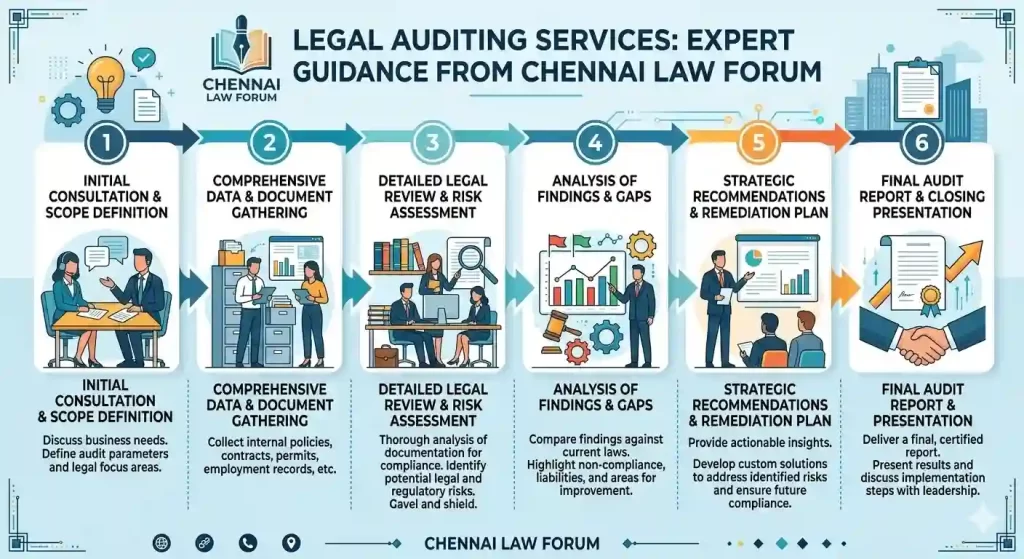
What Is a Legal Audit?
A legal audit is a detailed examination of a company’s legal framework. In simple terms, it is a process where lawyers review the organization’s legal documents, policies, procedures, and operations to ensure they comply with applicable laws.
During a legal audit, professionals examine areas such as:
- Corporate governance documents
- Contracts and agreements
- Employment policies and labour law compliance
- Regulatory approvals and licenses
- Intellectual property rights
- Risk management procedures
The main goal of a legal audit is to identify potential legal risks and recommend corrective measures before problems arise.
Therefore, instead of waiting for legal disputes to occur, organizations can proactively address issues through regular legal audits.
Why Legal Auditing Is Important
Legal auditing is important because it helps organizations maintain compliance with various laws and regulations. Businesses must follow many legal requirements related to taxation, labour laws, corporate governance, and industry-specific regulations.
Without proper monitoring, companies may unintentionally violate certain rules. As a result, they may face penalties, legal actions, or reputational damage.
Legal auditing provides a structured way to identify such issues early. It ensures that companies operate according to legal standards and avoid unnecessary risks.
Furthermore, legal audits also improve transparency in business operations, which increases trust among investors, partners, and customers.
Key Areas Covered in a Legal Audit
Legal auditing involves reviewing multiple aspects of an organization’s legal structure. Some of the most important areas include the following.
Corporate Compliance
Corporate compliance is one of the primary areas examined during a legal audit. Companies must follow regulations related to company registration, board meetings, statutory filings, and corporate governance practices.
A legal audit checks whether the company maintains proper records and complies with applicable corporate laws.
Contract Review
Contracts form the backbone of many business relationships. Therefore, reviewing contracts is a vital part of a legal audit.
Lawyers examine agreements with clients, vendors, suppliers, employees, and partners. They ensure that contracts are legally valid, clearly written, and free from risky clauses.
If necessary, legal professionals recommend revisions to strengthen contractual protections.
Labour Law Compliance
Organizations must comply with various labour laws regarding employee rights, wages, benefits, workplace safety, and working conditions.
During a legal audit, employment policies and HR practices are reviewed to ensure they comply with applicable labour regulations.
This process helps prevent employee disputes and labour law violations.
Regulatory Compliance
Many industries are subject to government regulations. For example, companies may require licenses, permits, or approvals from regulatory authorities.
Legal auditing ensures that these regulatory requirements are fulfilled and that the organization holds valid documentation.
Failure to comply with regulatory rules can lead to serious penalties, so regular auditing is extremely important.
Intellectual Property Protection
For businesses that rely on innovation, intellectual property protection is essential.
Legal auditors review trademarks, copyrights, patents, and other intellectual property rights. They ensure that the organization properly protects its brand, inventions, and creative works.
Additionally, they verify whether the company respects the intellectual property rights of others.
Risk Management
Another important objective of legal auditing is identifying potential legal risks. These risks may arise from poorly drafted contracts, non-compliance with regulations, or weak internal policies.
Once risks are identified, legal experts recommend strategies to address them effectively.
As a result, organizations can avoid costly legal disputes in the future.
Benefits of Legal Auditing Services
Legal auditing offers many advantages for businesses and organizations.
Early Detection of Legal Issues
One of the biggest benefits of legal auditing is early detection of potential legal problems. Instead of dealing with disputes later, companies can fix issues before they escalate.
This proactive approach saves time, money, and resources.
Improved Compliance
Legal audits ensure that organizations comply with all applicable laws and regulations. This helps businesses avoid fines, penalties, and legal proceedings.
Moreover, strong compliance systems improve the organization’s reputation and credibility.
Better Corporate Governance
Legal auditing strengthens corporate governance by ensuring transparency and accountability.
When companies maintain proper legal documentation and follow correct procedures, management decisions become more structured and reliable.
Stronger Business Relationships
Businesses rely heavily on contracts and partnerships. Legal auditing ensures that agreements are fair, legally valid, and clearly written.
This clarity reduces misunderstandings and helps maintain strong business relationships.
Increased Investor Confidence
Investors and financial institutions often review a company’s legal compliance before investing.
A well-documented legal audit demonstrates that the organization follows legal standards and manages risks responsibly.
Consequently, this increases investor confidence and business credibility.
When Should Businesses Conduct a Legal Audit?
Legal audits should not be performed only when problems arise. Instead, they should be conducted periodically to maintain compliance.
Organizations may consider conducting legal audits in the following situations:
- Before mergers or acquisitions
- During business expansion
- When entering new markets
- Before raising investments
- When regulatory laws change
- During internal restructuring
Regular audits help businesses remain prepared for legal and regulatory challenges.
Role of Legal Professionals in Legal Auditing
Legal auditing requires expertise in multiple areas of law. Experienced legal professionals understand how different laws interact and how compliance requirements apply to specific industries.
At Chennai Law Forum: Seniors Lawyers Law Firm, our senior legal experts provide comprehensive legal auditing services tailored to the needs of each client.
Our team carefully reviews legal documents, policies, and procedures. We identify potential legal gaps and provide practical recommendations to address them.
Moreover, we guide organizations in implementing corrective measures that strengthen their legal framework.
Legal Auditing for Different Types of Organizations
Legal auditing services benefit various types of organizations.
Businesses and Companies
Companies often deal with complex legal regulations, contracts, and compliance requirements. Legal audits help businesses manage these responsibilities effectively.
Startups
Startups frequently focus on innovation and growth. However, they may overlook legal compliance during their early stages.
Legal auditing ensures that startups build strong legal foundations for sustainable growth.
Non-Profit Organizations
NGOs and charitable organizations must comply with legal rules related to governance, funding, and reporting.
Legal audits help ensure transparency and accountability in their operations.
Professionals and Service Firms
Professional service providers such as consultants, agencies, and firms also benefit from legal auditing to review contracts and regulatory compliance.
Importance of Preventive Legal Strategy
Legal auditing forms an important part of a preventive legal strategy. Instead of reacting to legal disputes, organizations can anticipate risks and address them early.
This proactive approach reduces legal uncertainty and promotes stable business growth.
Furthermore, preventive legal practices help companies operate more efficiently and confidently.
Building a Culture of Compliance
Legal auditing should not be viewed as a one-time activity. Instead, it should be part of a broader culture of compliance within the organization.
Companies should encourage employees and management to understand legal responsibilities and follow ethical practices.
Training programs, clear policies, and regular legal reviews contribute to a strong compliance culture.
Such efforts reduce the likelihood of legal violations and improve overall organizational governance.
Frequently Asked Questions
1. What is a legal audit and why is it important for organizations?
A legal audit is a systematic review of a company’s legal documents, contracts, policies, and compliance practices to ensure that the organization follows applicable laws and regulations. It is important because businesses operate under various legal frameworks, including corporate laws, labour regulations, tax rules, and licensing requirements. If these rules are not properly followed, organizations may face penalties, disputes, or financial losses. A legal audit helps identify potential legal risks before they become serious problems. It also helps companies maintain transparency and improve their internal governance. By conducting regular legal audits, organizations can protect themselves from legal complications and ensure smooth business operations.
2. What areas are usually covered during a legal audit?
A legal audit typically examines several important areas of an organization’s operations. These include corporate compliance records, contracts and agreements, employment policies, regulatory licenses, intellectual property rights, and risk management procedures. Lawyers also review company policies to ensure they follow current legal standards. Additionally, the audit checks whether the organization maintains proper documentation for statutory filings, employee benefits, and regulatory approvals. This detailed review helps identify gaps in compliance and allows the organization to correct them before facing legal issues.
3. How often should a company conduct a legal audit?
The frequency of legal audits may vary depending on the size and nature of the organization. However, many businesses conduct legal audits annually to ensure continuous compliance. Companies may also perform legal audits during important business events such as mergers, acquisitions, expansion into new markets, or when major regulatory changes occur. Regular legal audits help organizations stay updated with changing laws and prevent legal risks from accumulating over time.
4. Who should conduct a legal audit?
Legal audits should be conducted by experienced legal professionals who understand corporate laws, regulatory requirements, and contractual obligations. Qualified lawyers can carefully examine legal documents, identify compliance issues, and recommend appropriate solutions. Professional legal guidance ensures that the audit process is accurate and reliable. Legal experts can also help organizations implement corrective measures and strengthen their internal legal systems.
5. How can legal auditing benefit businesses in the long term?
Legal auditing provides long-term benefits by helping organizations maintain compliance, reduce legal risks, and improve governance practices. When businesses regularly review their legal framework, they can prevent disputes, avoid penalties, and maintain a positive reputation. Legal auditing also improves contract management and strengthens business relationships. Additionally, investors and partners often feel more confident working with organizations that demonstrate strong legal compliance and transparency.
Conclusion
Legal auditing is an essential process that helps organizations maintain compliance, identify risks, and strengthen their legal framework. In an increasingly regulated business environment, companies cannot afford to overlook legal responsibilities.
By conducting regular legal audits, businesses can detect potential issues early, improve governance, and protect their reputation. Moreover, proper legal auditing enhances transparency, strengthens contracts, and supports long-term business stability.
At Chennai Law Forum: Seniors Lawyers Law Firm, we provide expert legal auditing services designed to meet the unique needs of each client. Our experienced legal team offers thorough reviews, strategic guidance, and practical solutions to help organizations navigate complex legal landscapes.
Read More
- Leading Property Attorneys: Chennai Law Forum Expertise
- Labour Law Legal Services: Expert Assistance in Chennai
- Internship for Law: Learning Opportunities at Chennai Law Forum
- International Trade Law Legal Services: Expert Assistance in Chennai
- International Attorney Services: Legal Representation from the best rated Law Firm
- Ministry of Corporate Affairs (MCA)