

In India, the fight against smuggling, tax evasion, and customs fraud is a critical part of maintaining the country’s economic and social stability. The Directorate of Revenue Intelligence (DRI) is the premier agency entrusted with investigating such cases. It functions under the Department of Revenue in the Ministry of Finance and plays a crucial role in enforcing customs, central excise, and anti-smuggling laws.
However, DRI investigations are complex and often involve high stakes. Individuals, companies, and even corporate executives may face legal consequences, including penalties, seizure of property, or imprisonment. Therefore, expert legal support is essential to navigate the intricacies of DRI cases. At Chennai Law Forum: Senior Lawyers Law Firm, we provide specialized legal assistance, ensuring clients understand their rights, obligations, and possible defenses.
Directorate Of Revenue Intelligence (DRI) Cases: Expert Legal Support – Chennai Law Forum: Senior Lawyers Law Firm
Understanding the Directorate of Revenue Intelligence
The DRI is responsible for investigating and preventing revenue loss caused by illegal imports, exports, smuggling, and evasion of customs or excise duties. Its mandate includes:
- Detecting and investigating smuggling of goods, drugs, and contraband
- Preventing customs duty evasion
- Monitoring and curbing illicit trade practices
- Supporting other agencies in cross-border investigations
DRI officers have wide powers to search premises, seize goods, arrest individuals, and file charges under various laws such as the Customs Act, Central Excise Act, and Narcotic Drugs and Psychotropic Substances Act. These powers, while necessary for enforcement, make DRI cases highly sensitive and legally challenging.
Who Can Be Affected by DRI Investigations?
DRI investigations can involve multiple types of stakeholders, including:
- Individuals: Traders, importers, or business owners accused of customs violations
- Companies: Firms involved in import-export business, logistics, or manufacturing
- Executives and Directors: Senior management may be personally liable in certain cases
- NGOs or Other Organizations: If involved in import-export or fund-related activities that violate laws
Because DRI cases often involve serious allegations of fraud or tax evasion, the legal implications can be significant, including fines, confiscation of assets, and even criminal prosecution.
Common Types of DRI Cases
DRI cases can vary widely, but some of the most common types include:
- Smuggling of Goods: This includes contraband items such as gold, electronics, narcotics, or prohibited items.
- Customs Duty Evasion: Cases where importers or exporters underreport values or misclassify goods to reduce taxes.
- Central Excise Violations: Non-payment or underpayment of excise duties by manufacturers.
- Fraudulent Claims and Misdeclarations: False documentation, fake invoices, or misrepresentation in customs filings.
- Cross-Border Economic Offenses: Illegal export of currency, export-import of restricted technology, or dual-use goods.
Each type of case has its own legal and procedural challenges, making specialized legal expertise crucial.
The DRI Investigation Process
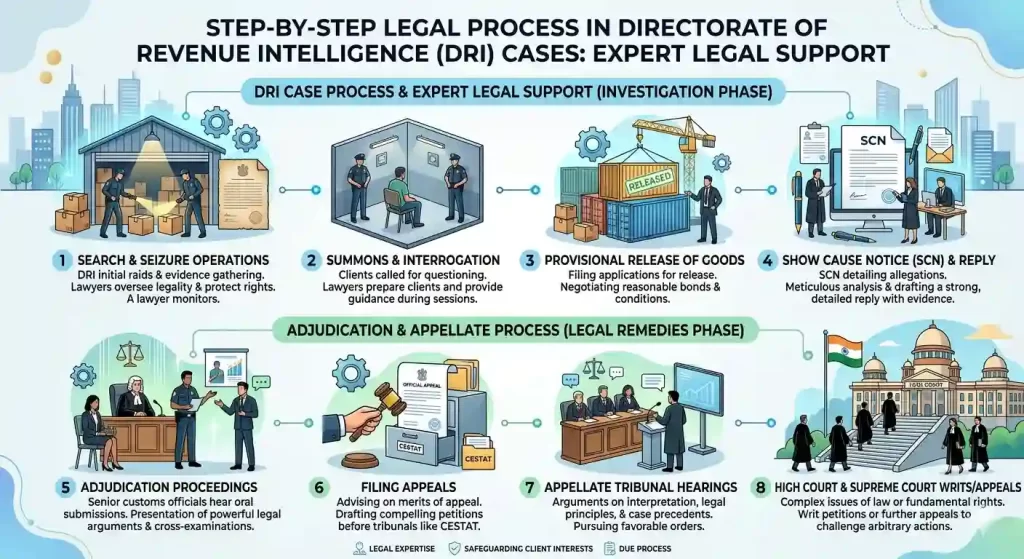
The DRI follows a structured process when investigating cases:
- Intelligence Gathering: The agency collects information through monitoring, surveillance, and tips from other departments.
- Search and Seizure: Based on evidence, DRI officers may search premises, warehouses, or vehicles and seize goods or documents.
- Interrogation: Individuals or company representatives may be questioned under legal procedures.
- Charge Sheet or Show Cause Notice: The agency issues a notice or files a complaint alleging violation of customs, excise, or anti-smuggling laws.
- Adjudication or Prosecution: Cases may proceed in customs courts, the adjudicating authority, or criminal courts depending on the severity.
Understanding these steps is vital, as missteps in responding to notices or investigations can significantly impact the outcome.
Challenges Faced by Individuals and Companies
DRI cases are inherently challenging due to several reasons:
- Complex Legal Framework: Multiple laws, including the Customs Act, Central Excise Act, and FEMA, may apply simultaneously.
- High Penalties and Seizures: Confiscation of goods, assets, and monetary fines are common.
- Criminal Liability: In serious cases, individuals can face imprisonment.
- Technical and Financial Evidence: Cases often involve large volumes of financial records, invoices, and accounting evidence.
- Reputational Risk: Allegations of smuggling or tax evasion can damage a company’s public image.
Because of these challenges, navigating a DRI investigation without expert legal assistance can be risky.
Importance of Expert Legal Support
Engaging a lawyer with expertise in DRI cases provides several advantages:
- Understanding Rights and Obligations: Lawyers guide clients on their rights during searches, seizures, and interrogations.
- Preparation of Evidence: Legal experts assist in organizing documents, invoices, and financial records for scrutiny.
- Representation in Adjudication: Lawyers advocate for clients in customs tribunals, DRI hearings, or courts to reduce penalties or contest allegations.
- Negotiation and Settlement: Where possible, lawyers help negotiate settlements, payment of duties, or penalty reduction.
- Compliance Advisory: Lawyers also provide guidance on regulatory compliance to prevent future investigations.
At Chennai Law Forum: Senior Lawyers Law Firm, we combine legal experience with strategic planning to protect our clients’ interests effectively.
Role of Lawyers in Search, Seizure, and Investigation
Lawyers play a critical role during the initial stages of a DRI case:
- Advising During Searches: Ensuring the search is conducted legally and clients’ rights are protected.
- Challenging Irregularities: Contesting unlawful or excessive seizures and procedural lapses.
- Interrogation Guidance: Preparing clients for questioning to avoid self-incrimination.
- Documentation: Ensuring accurate presentation of financial and transactional records.
By intervening early, lawyers can prevent escalation and reduce potential penalties.
Legal Remedies and Representation
Depending on the case, lawyers provide representation in:
- Customs Adjudicating Authority: For disputes related to duty evasion or confiscation.
- Customs Appellate Tribunal: Appealing orders from the adjudicating authority.
- Criminal Courts: Where the case involves prosecution under anti-smuggling or criminal statutes.
- High Court or Supreme Court: Filing writ petitions or appeals in cases of legal importance.
This multi-level approach ensures that clients have proper legal recourse at every stage.
Preventive Measures and Compliance
Legal experts also focus on preventive compliance:
- Conducting internal audits of customs, excise, and import-export operations.
- Advising on proper classification, valuation, and documentation of goods.
- Training staff on regulatory requirements to avoid violations.
- Ensuring timely payment of duties and accurate filing of returns.
Preventive measures reduce the likelihood of DRI investigations and provide peace of mind to businesses and individuals.
Benefits of Hiring Expert Lawyers
Engaging experienced lawyers in DRI cases offers multiple advantages:
- Reduced Risk of Penalties: Proper representation can minimize fines or avoid confiscation.
- Faster Resolution: Strategic legal action helps expedite proceedings.
- Protection of Reputation: Lawyers handle sensitive issues discreetly to safeguard public image.
- Peace of Mind: Clients can focus on business or personal matters while lawyers manage legal complexities.
Our firm emphasizes proactive and personalized solutions, ensuring that clients are informed and empowered throughout the process.
Challenges Without Legal Support
Facing a DRI investigation without legal assistance can lead to:
- Misinterpretation of notices or legal obligations
- Unprepared responses to seizures or interrogations
- Increased financial penalties or prolonged litigation
- Damage to personal or corporate reputation
- Risk of criminal prosecution due to procedural mistakes
Hence, timely engagement of lawyers is not optional—it is essential.
Frequently Asked Questions
1. What are DRI cases and who investigates them?
DRI cases involve violations related to smuggling, customs duty evasion, and excise fraud. The Directorate of Revenue Intelligence (DRI), operating under the Ministry of Finance, investigates such cases. It monitors illegal imports, exports, and financial misreporting to protect government revenue and maintain trade compliance. Individuals, companies, and executives can all be affected by these investigations.
2. Who can be held liable in a DRI investigation?
Liability can extend to various stakeholders. Traders, importers, and manufacturers may face penalties if they underreport or misclassify goods. Company directors and executives may be personally accountable for compliance failures. Even NGOs or organizations involved in import-export activities could be scrutinized if their operations violate customs or excise laws. Hence, anyone involved in the supply chain can be liable.
3. What is the typical DRI investigation process?
The process usually starts with intelligence gathering by the DRI, followed by searches and seizures of goods, documents, and assets. Individuals or company representatives may be interrogated. The DRI then issues a show-cause notice or files a charge sheet. Finally, cases proceed to the adjudicating authority, customs tribunal, or courts, depending on severity. Each stage has strict procedural requirements that must be carefully followed.
4. How can legal experts assist in DRI cases?
Lawyers provide critical guidance at every stage. They help clients understand their rights, prepare evidence, represent them in hearings, and negotiate settlements or penalty reductions. Legal counsel ensures proper compliance with notices and procedural rules, reducing the risk of fines, confiscation, or criminal liability. Lawyers also advise on preventive measures to avoid future investigations.
5. What preventive steps can businesses take to avoid DRI cases?
Companies and individuals should maintain accurate documentation, comply with customs and excise laws, and conduct regular internal audits. Correct classification and valuation of goods, timely duty payments, and staff training on regulatory compliance are essential. Preventive legal guidance significantly lowers the risk of DRI investigations and protects revenue and reputation.
Conclusion
DRI cases involve serious allegations related to smuggling, customs violations, and revenue evasion. The stakes are high, and navigating these cases requires a careful blend of legal knowledge, procedural expertise, and strategic planning.
At Chennai Law Forum: Senior Lawyers Law Firm, we provide comprehensive legal support for individuals, companies, and organizations facing DRI investigations. From search and seizure to adjudication and appeals, we guide clients at every stage.
With expert legal assistance, clients can protect their rights, minimize penalties, and ensure compliance with laws. Ultimately, proactive legal representation transforms a challenging DRI case into a manageable process, ensuring that justice is served while safeguarding business and personal interests.
Read More
- Direct Taxation Matters: Legal Guidance from Chennai Law Forum
- Defence & Internal Security Legal Services: Expert Counsel in Chennai
- Seeking Deemed Conveyance: Legal Assistance from Chennai Law Forum
- Debt Recovery Tribunal (DRT) Matters: Legal Representation in Chennai
- Data Protection Legal Services: Expert Assistance from Chennai Law Forum
- Directorate of Revenue Intelligence (DRI) – Official Website