

Direct Taxation Matters – In today’s financial world, taxation plays a major role in both personal and business decisions. Among all types of taxes, direct taxes are especially important because they are paid directly to the government by individuals and organizations. However, while paying taxes is a legal duty, understanding and managing tax laws can often feel confusing and stressful. Therefore, proper legal guidance becomes essential.
At Chennai Law Forum: Seniors Lawyers Law Firm, we provide clear, reliable, and practical assistance in handling direct taxation matters. Through our experience and client-focused approach, we help individuals, companies, NGOs, and NRIs navigate tax issues with confidence. In this article, we explain direct taxation in simple terms, discuss common challenges, and highlight how legal support can make a difference.
Direct Taxation Matters: Legal Guidance from Chennai Law Forum – Chennai Law Forum: Seniors Lawyers Law Firm
What is Direct Taxation?
To begin with, direct taxes are taxes that a person or entity pays directly to the government. These taxes cannot be transferred to another person. In other words, the burden of payment falls entirely on the taxpayer.
The most common example is income tax. Individuals, businesses, and other entities must pay tax based on their earnings or profits. Direct taxes also include capital gains tax, corporate tax, and wealth-related taxes.
In India, direct taxation is mainly governed by the Income Tax Act, 1961. This law defines how income is calculated, how taxes are paid, and how disputes are handled.
Why Direct Tax Matters Are Important
Direct taxation affects almost everyone. Whether you are a salaried employee, a business owner, or an investor, tax compliance is necessary.
Firstly, proper tax management helps avoid penalties. If taxes are not filed correctly or paid on time, authorities may impose fines or legal action.
Secondly, effective tax planning can reduce financial burden. By using available deductions and exemptions, taxpayers can legally save money.
Moreover, accurate tax compliance builds credibility. Businesses with proper tax records are more likely to gain trust from investors and financial institutions.
Therefore, handling direct tax matters carefully is essential for both legal and financial well-being.
Role of Tax Authorities in India
In India, direct taxes are administered by the Income Tax Department. This authority operates under the Ministry of Finance and is responsible for collecting taxes and enforcing tax laws.
The department conducts assessments, audits, and investigations to ensure compliance. It also provides online services for filing returns, tracking refunds, and responding to notices.
Because of its wide powers, dealing with the Income Tax Department requires proper knowledge and timely action.
Common Direct Tax Issues Faced by Taxpayers
Taxpayers often encounter various challenges while dealing with direct taxation.
1. Filing Errors
Many individuals make mistakes while filing tax returns. Incorrect information can lead to notices or penalties.
2. Tax Notices
Receiving a notice from the tax department can be stressful. It may relate to mismatched income details, delayed filing, or suspected discrepancies.
3. Assessment and Scrutiny
In some cases, the department may review a taxpayer’s records in detail. This process, known as scrutiny, requires proper documentation and explanation.
4. Disputes and Appeals
Disagreements between taxpayers and authorities may lead to disputes. These can involve tax calculations, deductions, or penalties.
5. Issues for NRIs and Businesses
NRIs and companies often face complex tax rules, especially regarding cross-border transactions and compliance requirements.
Importance of Legal Guidance in Tax Matters
Although tax filing may seem straightforward, legal complexities can arise at any stage. Therefore, professional guidance is extremely valuable.
At Chennai Law Forum: Seniors Lawyers Law Firm, we help clients understand their obligations and rights. With expert advice, taxpayers can avoid costly mistakes and handle issues effectively.
Moreover, legal experts ensure that all procedures are followed correctly. This reduces the risk of penalties and strengthens the taxpayer’s position in case of disputes.
Services Offered by Chennai Law Forum
We provide a wide range of services related to direct taxation.
Tax Planning and Advisory
First and foremost, we assist in tax planning. By analyzing your financial situation, we suggest strategies to minimize tax liability within the legal framework.
Return Filing Assistance
We help in preparing and filing accurate tax returns. This ensures compliance and reduces the chances of errors.
Handling Tax Notices
If you receive a notice, we guide you on how to respond. We prepare replies, gather documents, and represent you before authorities.
Assessment and Scrutiny Support
During scrutiny proceedings, we assist in presenting your case clearly and effectively.
Appeals and Litigation
If disputes arise, we represent clients in appeals before tax authorities and courts. Our goal is to achieve a fair outcome.
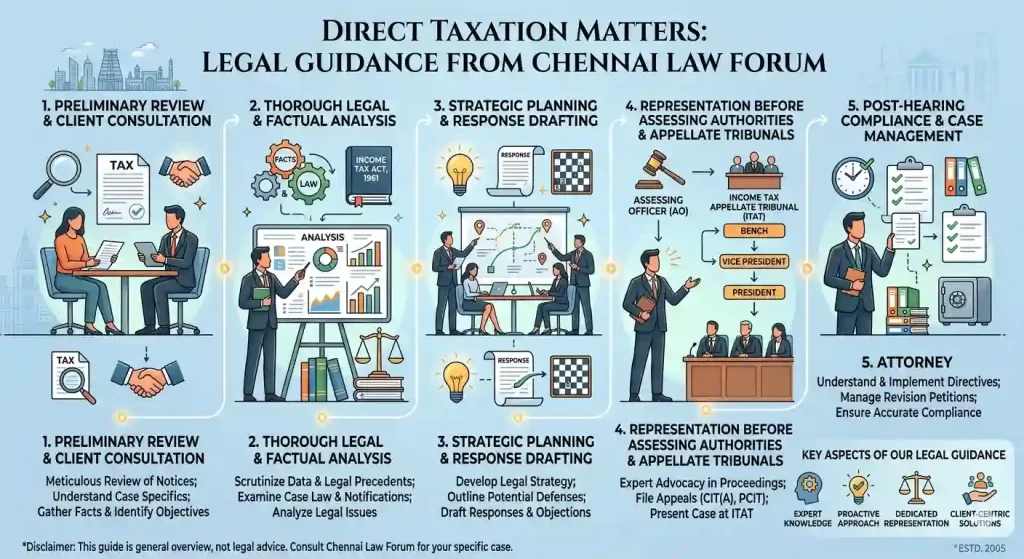
Step-by-Step Approach to Handling Tax Issues
Handling tax matters requires a systematic approach.
Step 1: Understanding the Issue
First, identify the problem clearly. This may involve reviewing notices, returns, or financial records.
Step 2: Gathering Documents
Next, collect all relevant documents such as income statements, bank records, and invoices.
Step 3: Legal Analysis
Then, analyze the situation based on tax laws and regulations.
Step 4: Preparing Response
After that, prepare a proper response or submission to the authorities.
Step 5: Representation
Finally, present the case effectively before the tax department or appellate authorities.
By following these steps, taxpayers can handle issues more confidently.
Tips for Effective Tax Compliance
To avoid complications, it is important to follow good tax practices.
- File returns on time
- Maintain accurate financial records
- Declare all sources of income
- Use available deductions wisely
- Respond promptly to notices
By adopting these habits, taxpayers can reduce risks and ensure smooth compliance.
Special Considerations for Businesses and NRIs
Businesses and NRIs often face additional challenges in direct taxation.
For businesses, issues may arise in areas such as profit calculation, transfer pricing, and compliance with corporate tax rules.
On the other hand, NRIs must deal with tax implications on income earned in India. They also need to understand double taxation agreements and reporting requirements.
Therefore, expert legal guidance becomes even more important in such cases.
Benefits of Professional Legal Support
Working with experienced tax lawyers offers several advantages.
Firstly, it ensures accuracy. Professionals understand complex laws and apply them correctly.
Secondly, it saves time. Instead of dealing with complicated procedures, clients can focus on their work.
Moreover, it improves outcomes. Strong legal representation increases the chances of favorable decisions in disputes.
Most importantly, it provides peace of mind. Knowing that your tax matters are handled by experts reduces stress and uncertainty.
Real-Life Example
Consider a situation where a business receives a tax notice for alleged underreporting of income. Without proper guidance, the company may struggle to respond.
However, with legal assistance, the company can present accurate records, explain discrepancies, and resolve the issue effectively. This not only avoids penalties but also protects the company’s reputation.
The Future of Direct Taxation in India
Direct taxation in India is evolving rapidly. The government is introducing digital systems and simplifying procedures.
Online filing, automated processing, and data analysis are becoming more common. As a result, transparency and efficiency are improving.
However, with increased monitoring, compliance requirements are also becoming stricter. Therefore, staying informed and prepared is essential.
Frequently Asked Questions
1. What are direct taxes and who needs to pay them?
Direct taxes are taxes paid directly by individuals or organizations to the government. These include income tax, capital gains tax, and corporate tax. In India, they are governed by the Income Tax Act, 1961. Every person earning income above the prescribed limit must pay direct tax. Therefore, salaried individuals, business owners, companies, and even NRIs with income in India are required to comply with these tax laws.
2. Why is legal guidance important in direct taxation matters?
Legal guidance helps taxpayers understand complex tax laws and avoid mistakes. Many people face issues such as incorrect filing, notices, or disputes due to lack of knowledge. With expert assistance, taxpayers can ensure accurate compliance, proper documentation, and timely responses. As a result, legal support reduces risks of penalties and improves overall financial planning.
3. What should I do if I receive a notice from the Income Tax Department?
If you receive a notice from the Income Tax Department, you should not ignore it. First, carefully read the notice and understand the reason. Then, gather relevant documents and seek professional legal advice. Timely and correct responses can prevent further complications and help resolve the issue effectively.
4. How can businesses and NRIs manage their tax compliance effectively?
Businesses and NRIs must maintain proper records, declare all income, and follow applicable tax rules. They should also understand special provisions such as international taxation and double taxation agreements. Therefore, regular consultation with tax experts ensures smooth compliance and avoids legal issues.
5. What are the common mistakes to avoid in direct tax matters?
Common mistakes include late filing, incorrect income reporting, missing deductions, and ignoring tax notices. In addition, poor record-keeping can create problems during scrutiny. Therefore, maintaining accurate documents and seeking timely legal guidance can help avoid these errors and ensure hassle-free compliance.
Conclusion
In conclusion, direct taxation is a critical aspect of financial and legal responsibility. While it may seem complex, proper understanding and guidance can make it manageable.
At Chennai Law Forum: Seniors Lawyers Law Firm, we are committed to helping clients navigate direct tax matters with ease. From planning and compliance to dispute resolution, we provide comprehensive support at every stage.
So, whether you are an individual, a business, or an NRI, do not let tax issues overwhelm you. Instead, take a proactive approach and seek expert legal assistance.
Read More
- Defence & Internal Security Legal Services: Expert Counsel in Chennai
- Seeking Deemed Conveyance: Legal Assistance from Chennai Law Forum
- Debt Recovery Tribunal (DRT) Matters: Legal Representation in Chennai
- Data Protection Legal Services: Expert Assistance from Chennai Law Forum
- Combatting Cybercrime: Legal Support from Chennai Law Forum
- Income Tax Department – Official Portal