
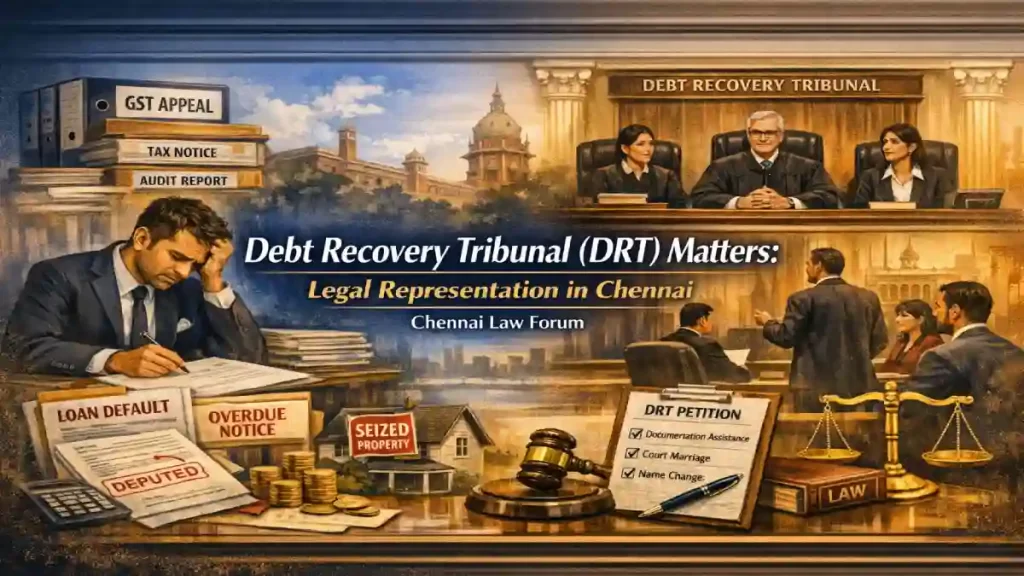
Debt Recovery Tribunal (DRT) Matters – In today’s fast-moving financial world, loans and credit facilities play a crucial role in supporting businesses and individuals. Banks and financial institutions regularly provide loans for business expansion, housing, education, and personal needs. However, sometimes borrowers may face financial difficulties and fail to repay their loans on time. As a result, disputes arise between lenders and borrowers regarding repayment.
To handle such disputes efficiently, the Government of India established special tribunals known as Debt Recovery Tribunals (DRTs). These tribunals deal specifically with cases involving the recovery of debts owed to banks and financial institutions. Compared to traditional civil courts, DRTs aim to resolve debt recovery cases more quickly and effectively.
Nevertheless, DRT proceedings can be legally complex. Both banks and borrowers must follow specific procedures and submit proper documentation. Therefore, professional legal representation becomes extremely important.
At Chennai Law Forum: Seniors Lawyers Law Firm, we provide experienced legal representation for clients involved in Debt Recovery Tribunal matters in Chennai. In this article, we explain the role of the DRT, the types of cases handled by the tribunal, and the importance of legal support in such proceedings.
Debt Recovery Tribunal (DRT) Matters: Legal Representation in Chennai – Chennai Law Forum: Seniors Lawyers Law Firm
Understanding the Debt Recovery Tribunal
The Debt Recovery Tribunal is a specialized legal forum created to handle cases related to the recovery of debts by banks and financial institutions.
Before the establishment of DRTs, banks had to approach civil courts to recover unpaid loans. However, civil court proceedings often took several years to conclude. This delay affected the financial system and created difficulties for lenders.
To solve this issue, the Government introduced the Recovery of Debts and Bankruptcy Act, 1993 (formerly known as the Recovery of Debts Due to Banks and Financial Institutions Act). This law established Debt Recovery Tribunals across India to provide faster resolution of debt recovery disputes.
DRTs primarily deal with cases where banks and financial institutions seek to recover large outstanding loans from borrowers.
Jurisdiction of the Debt Recovery Tribunal
Debt Recovery Tribunals handle specific types of financial disputes.
Generally, banks and financial institutions file applications before the DRT when the loan amount involved exceeds the minimum threshold prescribed under the law. These cases may involve unpaid loans, credit facilities, or financial guarantees.
The tribunal examines the claim made by the bank or financial institution and allows the borrower to present their defense.
After hearing both sides, the tribunal may issue orders for recovery of the debt or provide other directions as permitted under the law.
Therefore, DRTs play an important role in maintaining financial discipline in the banking system.
Types of Cases Handled by DRT
The Debt Recovery Tribunal deals with several types of financial disputes involving banks and borrowers.
For instance, banks may approach the tribunal to recover unpaid business loans, housing loans, or secured credit facilities.
Similarly, disputes may arise when borrowers default on repayment obligations or when banks initiate recovery proceedings.
In many situations, borrowers may also challenge the actions taken by banks under certain recovery laws.
These cases often involve complex financial documents, loan agreements, and security interests. Consequently, legal expertise becomes essential in presenting a strong case before the tribunal.
Debt Recovery Process Before the DRT
The debt recovery process before the tribunal follows a structured procedure.
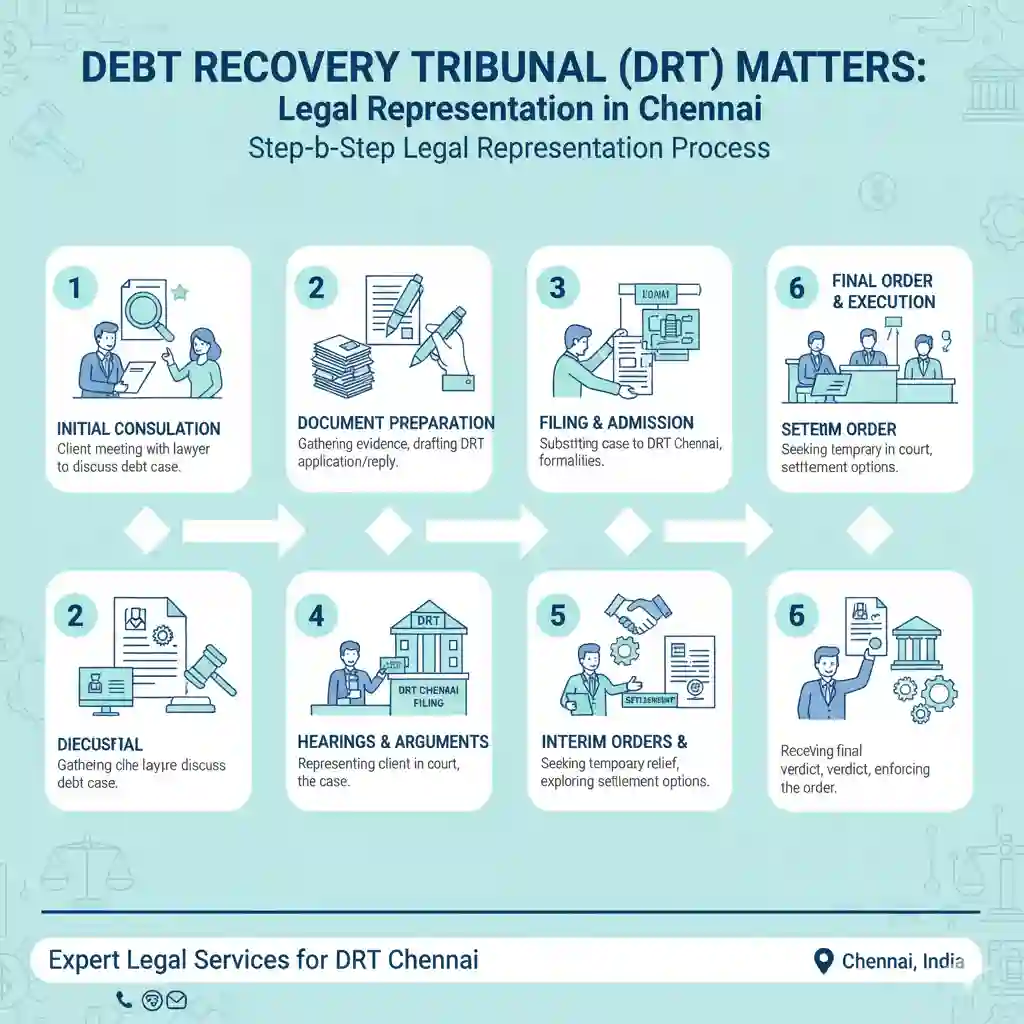
First, the bank or financial institution files an application before the tribunal seeking recovery of the outstanding amount. This application includes details of the loan, the borrower’s default, and the total amount claimed.
Next, the tribunal issues a notice to the borrower, asking them to respond to the claim.
After receiving the notice, the borrower may file a written statement explaining their position and raising any legal objections.
Following this, the tribunal conducts hearings where both parties present their arguments, documents, and evidence.
Finally, after reviewing all materials, the tribunal issues its decision.
If the tribunal allows the claim, it may issue a Recovery Certificate, which enables authorities to take steps for recovering the debt.
Role of the Recovery Officer
Once the tribunal issues a recovery certificate, the case moves to the recovery stage.
At this stage, a Recovery Officer takes charge of enforcing the tribunal’s order.
The Recovery Officer may take various actions to recover the debt. For example, they may attach or sell the borrower’s property, freeze bank accounts, or take other lawful steps.
Because these actions can significantly affect the borrower’s financial situation, proper legal representation becomes extremely important during the recovery process.
Borrower’s Rights in DRT Proceedings
Although DRT cases are often initiated by banks, borrowers also have important legal rights.
Borrowers have the right to receive notice of the proceedings and present their defense before the tribunal.
They may challenge the amount claimed by the bank, dispute interest calculations, or raise legal objections related to the loan agreement.
Additionally, borrowers can request restructuring, settlement, or other relief depending on the circumstances.
Legal representation helps ensure that borrowers fully exercise these rights and present their case effectively.
Appeals Before the Debt Recovery Appellate Tribunal
If either party is dissatisfied with the decision of the Debt Recovery Tribunal, they may file an appeal before the Debt Recovery Appellate Tribunal (DRAT).
The appellate tribunal reviews the decision of the DRT and examines whether the law has been correctly applied.
However, filing an appeal usually requires a deposit of a portion of the debt amount. This requirement ensures that only serious appeals are pursued.
Because appellate proceedings involve detailed legal arguments, professional legal assistance becomes even more important at this stage.
Importance of Legal Representation in DRT Cases
Debt Recovery Tribunal proceedings involve complex financial records, legal provisions, and procedural rules.
Therefore, legal representation plays a crucial role in ensuring that clients receive fair treatment and proper guidance.
Experienced lawyers carefully examine loan agreements, repayment records, and bank claims before preparing a defense or recovery strategy.
They also ensure that all procedural requirements are met, including filing documents, responding to notices, and presenting arguments during hearings.
Furthermore, legal professionals negotiate with banks when settlement or restructuring options are possible.
As a result, clients benefit from a strategic and well-informed approach to their case.
Common Challenges in DRT Matters
Many individuals and businesses face difficulties when dealing with DRT proceedings.
For example, borrowers may feel overwhelmed by legal notices or unsure about how to respond to bank claims.
Similarly, businesses facing financial distress may struggle to organize financial documents or prepare proper legal defenses.
In some cases, banks may also encounter delays due to incomplete documentation or procedural issues.
With professional legal assistance, these challenges can be managed more effectively.
Legal Services Provided by Chennai Law Forum
At Chennai Law Forum: Seniors Lawyers Law Firm, we offer comprehensive legal services for Debt Recovery Tribunal matters in Chennai.
Our team assists both lenders and borrowers in navigating DRT proceedings with clarity and confidence.
We provide services such as reviewing loan documents, preparing legal responses, filing applications before the tribunal, and representing clients during hearings.
In addition, we assist clients with settlement negotiations, restructuring discussions, and appellate proceedings before higher tribunals.
Because each case is unique, we focus on developing customized legal strategies that protect our clients’ interests.
Why Choose Experienced DRT Lawyers
Handling a DRT case without professional legal guidance can be risky.
Debt recovery laws involve technical provisions and strict procedural rules. Even small mistakes can affect the outcome of the case.
Experienced lawyers understand the legal framework governing DRT proceedings and know how to present arguments effectively.
They also maintain clear communication with clients, ensuring that they understand each stage of the process.
By choosing experienced legal professionals, clients gain confidence and clarity during what can otherwise be a stressful legal situation.
Frequently Asked Questions
1. What is the purpose of the Debt Recovery Tribunal (DRT)?
The Debt Recovery Tribunal (DRT) was established to help banks and financial institutions recover unpaid loans more quickly and efficiently. Before DRTs were created, banks had to file recovery cases in civil courts, which often took many years to resolve. To reduce delays and improve the recovery process, the government introduced specialized tribunals that focus only on debt recovery matters. The DRT examines cases where borrowers have defaulted on loans taken from banks or financial institutions. After reviewing the documents and hearing both sides, the tribunal may issue orders for repayment. If the claim is proved, the tribunal can also issue a recovery certificate that allows authorities to recover the amount through legal means.
2. Who can file a case before the Debt Recovery Tribunal?
Banks and financial institutions usually file cases before the Debt Recovery Tribunal when borrowers fail to repay their loans. These cases involve large outstanding loan amounts and financial disputes related to repayment. However, borrowers are not without rights. Borrowers can appear before the tribunal and defend themselves against the claims made by the bank. In some situations, borrowers may also file applications or objections if they believe the bank has taken unfair recovery actions.
3. What happens after a bank files a case in the DRT?
Once a bank files a recovery application before the tribunal, the DRT issues a notice to the borrower. The borrower then has the opportunity to file a written response and present their defense. After this, the tribunal conducts hearings where both parties submit documents, arguments, and evidence. The tribunal carefully reviews the case before making a final decision.
4. Can a DRT decision be challenged?
Yes, decisions made by the Debt Recovery Tribunal can be challenged before the Debt Recovery Appellate Tribunal (DRAT). If either party is dissatisfied with the DRT’s order, they may file an appeal within the prescribed time limit.
5. Why is legal representation important in DRT cases?
Legal representation is important because DRT cases involve technical financial documents, legal procedures, and complex recovery laws. Experienced lawyers help clients understand the legal process, prepare proper documents, present strong arguments, and protect their rights during tribunal proceedings.
Conclusion
Debt Recovery Tribunals play a vital role in resolving financial disputes between banks and borrowers. By providing a specialized forum for debt recovery cases, these tribunals help maintain efficiency and discipline in the financial system.
However, DRT proceedings involve legal complexities that require careful handling. Both lenders and borrowers must follow procedural rules and present strong legal arguments to protect their interests.
Therefore, professional legal representation becomes essential for navigating these proceedings successfully.
At Chennai Law Forum: Seniors Lawyers Law Firm, we remain committed to providing skilled and reliable legal assistance in Debt Recovery Tribunal matters in Chennai. Through our experience and dedication, we help clients address financial disputes effectively while ensuring that their legal rights remain fully protected.
Read More
- Data Protection Legal Services: Expert Assistance from Chennai Law Forum
- Combatting Cybercrime: Legal Support from Chennai Law Forum
- Best Legal Advisor in Chennai: Expert Guidance from Chennai Law Forum
- Legal Bond Writer: Professional Legal Documentation Services in Chennai
- Legal Auditing Services: Expert Guidance from Chennai Law Forum
- Debt Recovery Appellate Tribunal – Chennai