

Combatting Cybercrime – In today’s digital age, technology has transformed the way people live, work, and communicate. Online banking, social media, e-commerce, and digital payments have become part of daily life. However, while technology offers convenience and speed, it also creates new risks. Cybercrime has become one of the fastest-growing threats affecting individuals, businesses, and institutions.
From online fraud and identity theft to hacking and cyber harassment, digital crimes can cause serious financial and emotional harm. Therefore, understanding cybercrime laws and seeking proper legal support has become extremely important. At Chennai Law Forum: Seniors Lawyers Law Firm, we provide legal assistance to help victims protect their rights and take action against cyber offenders.
Combatting Cybercrime: Legal Support from Chennai Law Forum – Chennai Law Forum: Seniors Lawyers Law Firm
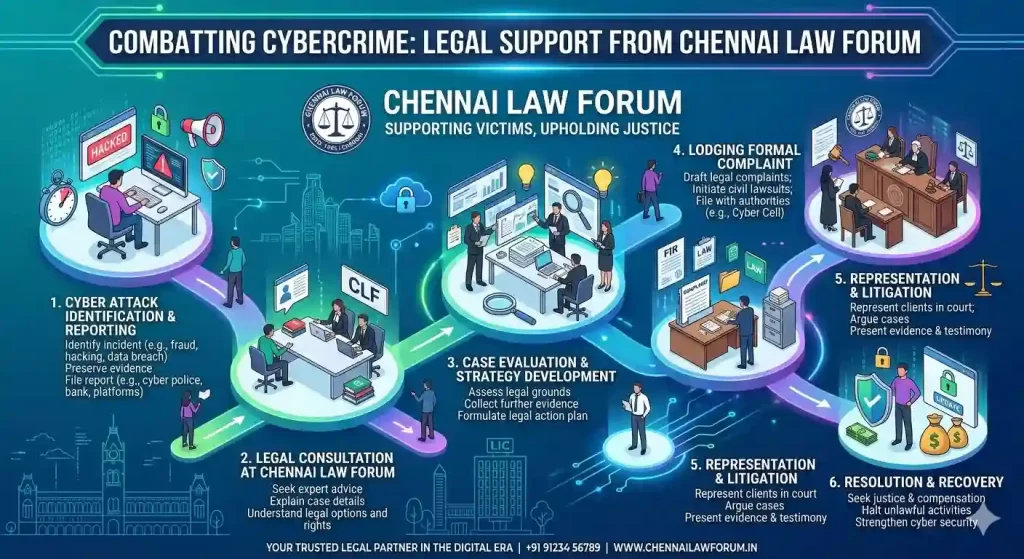
Understanding Cybercrime in the Modern World
Cybercrime refers to criminal activities carried out using computers, digital devices, or the internet. These crimes target individuals, businesses, and even government systems.
For example, criminals may steal personal data, hack email accounts, conduct online financial fraud, or spread harmful content on social media. Because these crimes occur in the digital space, they can sometimes be difficult to trace.
Nevertheless, Indian law provides strong legal provisions to deal with cyber offences. The primary legislation addressing such crimes is the Information Technology Act, 2000. This law defines cyber offences and prescribes penalties for illegal digital activities.
As technology evolves, cybercriminals continuously develop new methods. Consequently, awareness and legal preparedness are essential for both individuals and organizations.
Common Types of Cybercrime
Cybercrime appears in many different forms. Understanding these common threats helps people recognize risks and take preventive steps.
One of the most widespread cybercrimes is online financial fraud. Criminals often trick victims through fake websites, phishing emails, or fraudulent phone calls to obtain banking information.
Another common offence is identity theft, where criminals misuse personal details such as Aadhaar numbers, passwords, or credit card information.
Cyber harassment is also becoming increasingly common. Individuals may face online threats, defamation, stalking, or harassment through social media platforms.
Additionally, businesses often face data breaches and hacking attacks, where confidential company information is stolen or manipulated.
Because these crimes can affect anyone, prompt legal action is essential to prevent further damage.
Legal Framework for Cybercrime in India
India has developed a legal framework to address cyber offences and protect digital users.
The most important law governing cybercrime is the Information Technology Act, 2000. This legislation deals with hacking, identity theft, online fraud, and electronic data protection.
In addition, certain cyber offences may also fall under the Indian Penal Code, 1860, which covers crimes such as cheating, criminal intimidation, and defamation.
Cybercrime complaints are usually investigated by specialized cybercrime units within law enforcement agencies. Victims can file complaints through the National Cyber Crime Reporting Portal, which allows individuals to report online offences quickly.
Together, these legal mechanisms provide victims with pathways to seek justice and recover losses.
How Cybercrime Affects Individuals
Cybercrime can have serious consequences for individuals. Financial fraud may result in significant monetary losses, especially when criminals gain access to bank accounts or digital wallets.
Moreover, identity theft can lead to misuse of personal information, causing long-term damage to an individual’s reputation and financial standing.
Online harassment can also create emotional distress and psychological pressure. Victims may feel unsafe or anxious about their digital presence.
Therefore, when individuals face cybercrime, they should take immediate action. Reporting the incident quickly increases the chances of tracking the offender and recovering losses.
Legal professionals can guide victims through the complaint process and help them understand their rights.
Cybercrime Risks for Businesses
Businesses are particularly vulnerable to cybercrime because they often store large amounts of sensitive data.
For example, companies maintain customer records, financial information, and intellectual property on digital systems. If hackers gain unauthorized access to this data, the consequences can be severe.
Cyber attacks can disrupt operations, damage a company’s reputation, and result in financial losses. Furthermore, businesses may also face legal liability if they fail to protect customer data adequately.
Therefore, companies must adopt strong cybersecurity practices and comply with relevant laws. In addition, they should seek legal advice to ensure that their data protection policies align with legal requirements.
Importance of Immediate Legal Action
When cybercrime occurs, time plays a critical role. Delays in reporting the offence may reduce the chances of tracing the offender or recovering stolen funds.
First, victims should secure their digital accounts by changing passwords and notifying their banks or service providers.
Next, they should file a complaint with the appropriate cybercrime authorities. Providing detailed information about the incident helps investigators take swift action.
Legal professionals can assist in preparing complaints, collecting evidence, and guiding victims through the investigation process.
By acting quickly, victims improve their chances of achieving justice and minimizing losses.
Legal Services Provided by Chennai Law Forum
At Chennai Law Forum: Seniors Lawyers Law Firm, we provide comprehensive legal support to individuals and organizations facing cybercrime challenges.
Our legal team assists clients in understanding cyber laws and evaluating their legal options. We help victims file complaints before cybercrime authorities and ensure that cases are properly documented.
Additionally, we represent clients in court proceedings related to cyber offences. Our lawyers prepare legal strategies, present evidence, and advocate for the protection of our clients’ rights.
For businesses, we also provide preventive legal advice. This includes reviewing cybersecurity policies, drafting data protection agreements, and advising companies on regulatory compliance.
Through these services, we help clients navigate complex cybercrime issues with confidence.
Preventive Measures Against Cybercrime
Although legal remedies exist, prevention remains the best defense against cybercrime.
Individuals should adopt simple digital safety practices such as using strong passwords, enabling two-factor authentication, and avoiding suspicious links.
Moreover, people should be cautious when sharing personal information online. Verifying the authenticity of websites and online platforms is also essential.
Businesses should invest in cybersecurity infrastructure, conduct regular security audits, and train employees about digital safety.
When individuals and organizations combine technological precautions with legal awareness, the risk of cybercrime decreases significantly.
The Growing Role of Cyber Law Experts
As digital technology continues to evolve, cyber law has become an increasingly specialized area of legal practice.
Cybercrime cases often involve technical evidence, digital records, and complex legal procedures. Therefore, legal professionals handling such matters must understand both law and technology.
Experienced cyber law lawyers can analyze digital evidence, coordinate with investigators, and build strong legal arguments.
At Chennai Law Forum: Seniors Lawyers Law Firm, our legal team stays updated with developments in cyber law and technology. This allows us to provide effective legal representation to our clients.
Frequently Asked Questions
1. What is cybercrime and how is it defined under Indian law?
Cybercrime refers to criminal activities carried out using computers, digital devices, or the internet. These offences include hacking, identity theft, online fraud, cyberstalking, and unauthorized access to data. In India, cyber offences are primarily governed by the Information Technology Act, 2000, which provides legal provisions to punish individuals who misuse digital technologies for illegal purposes. In addition, certain cyber offences may also be prosecuted under the Indian Penal Code, 1860 when crimes such as cheating, intimidation, or defamation occur online. These laws together create a framework to protect individuals and businesses from cyber threats.
2. What should a person do immediately after becoming a victim of cybercrime?
If someone becomes a victim of cybercrime, the first step is to secure all affected accounts by changing passwords and informing the bank or service provider if financial information is involved. Next, the victim should collect evidence such as screenshots, transaction details, emails, or messages related to the incident. After that, the incident should be reported to the appropriate authorities through the National Cyber Crime Reporting Portal or the nearest cybercrime police station. Taking immediate action increases the chances of tracing the offender and recovering financial losses.
3. Can businesses also take legal action against cybercrime?
Yes, businesses can take legal action if they face cyber attacks such as data breaches, hacking, or online fraud. Companies often store sensitive information about customers, financial transactions, and intellectual property. If cybercriminals gain unauthorized access to this data, it may cause serious financial and reputational damage. Businesses can file complaints with cybercrime authorities and seek legal remedies under the Information Technology Act and other applicable laws.
4. Is online harassment considered a cybercrime in India?
Yes, online harassment, cyberstalking, and digital threats are recognized as cyber offences in India. Such acts may include sending abusive messages, spreading defamatory content online, or repeatedly contacting someone with harmful intent. Victims can seek legal protection under provisions of the Information Technology Act, 2000 and relevant sections of criminal law.
5. How can a cybercrime lawyer help victims?
A cybercrime lawyer helps victims understand their legal rights and guides them through the process of filing complaints and pursuing legal action. The lawyer may assist in preparing legal documents, collecting digital evidence, and representing the victim before authorities or courts. Professional legal support can make the process more effective and help victims obtain justice and compensation where applicable.
Conclusion
Cybercrime poses a serious challenge in today’s digital society. From financial fraud and identity theft to hacking and online harassment, these offences can cause significant harm to individuals and businesses.
Fortunately, Indian law provides strong mechanisms to address cyber offences and protect victims. By understanding cybercrime laws and seeking professional legal support, victims can take effective action against offenders.
At Chennai Law Forum: Seniors Lawyers Law Firm, we are committed to helping clients combat cybercrime through reliable legal guidance and representation. Our goal is to ensure that victims receive justice while also promoting safer digital practices.
Read More
- Best Legal Advisor in Chennai: Expert Guidance from Chennai Law Forum
- Legal Bond Writer: Professional Legal Documentation Services in Chennai
- Legal Auditing Services: Expert Guidance from Chennai Law Forum
- Leading Property Attorneys: Chennai Law Forum Expertise
- Labour Law Legal Services: Expert Assistance in Chennai
- Indian Cybercrime Coordination Centre (I4C)