
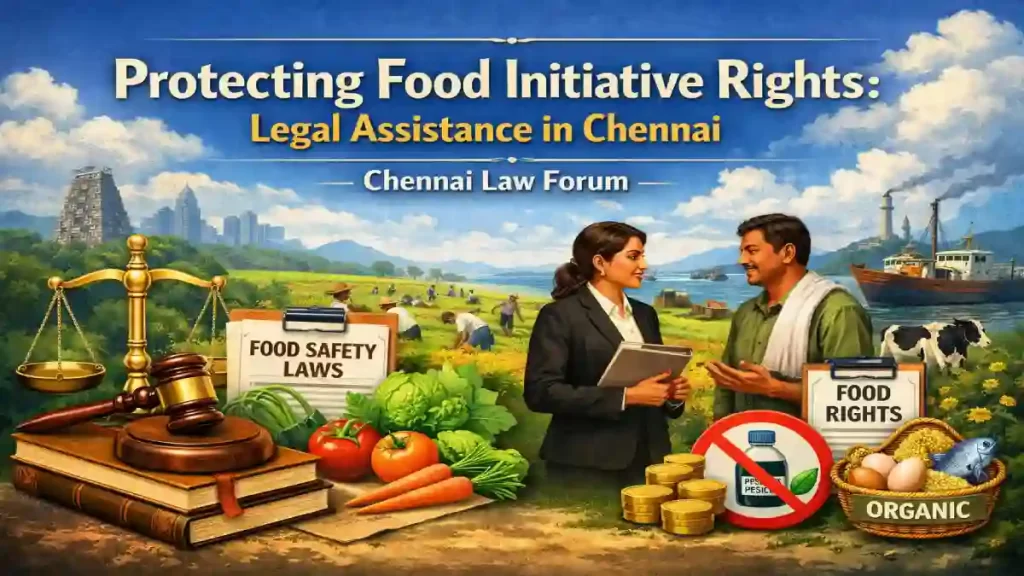
Protecting Food Initiative Rights – Food initiative rights protect lawful activities involving food production, processing, distribution, storage, retail, public welfare, and consumer safety. These rights support businesses, farmers, NGOs, startups, self-help groups, exporters, importers, and charitable organizations across India. Therefore, legal compliance remains essential for avoiding regulatory disputes and financial losses. Chennai Law Forum provides strategic legal assistance for licensing, regulatory approvals, compliance audits, litigation, and dispute resolution.
Relevant authorities include the Food Safety and Standards Authority of India, Tamil Nadu Food Safety Department, Greater Chennai Corporation, Ministry of Health and Family Welfare, and District Administration. Businesses may also approach Consumer Commissions, Civil Courts, High Courts, the Supreme Court, and specialized tribunals where jurisdiction applies. Additionally, disputes involving fraud, forgery, or criminal misconduct may invoke BNS, BNSS, BSA, and other applicable laws. Early legal guidance significantly reduces regulatory risks and protects commercial interests.
Protecting Food Initiative Rights: Legal Assistance in Chennai – Chennai Law Forum
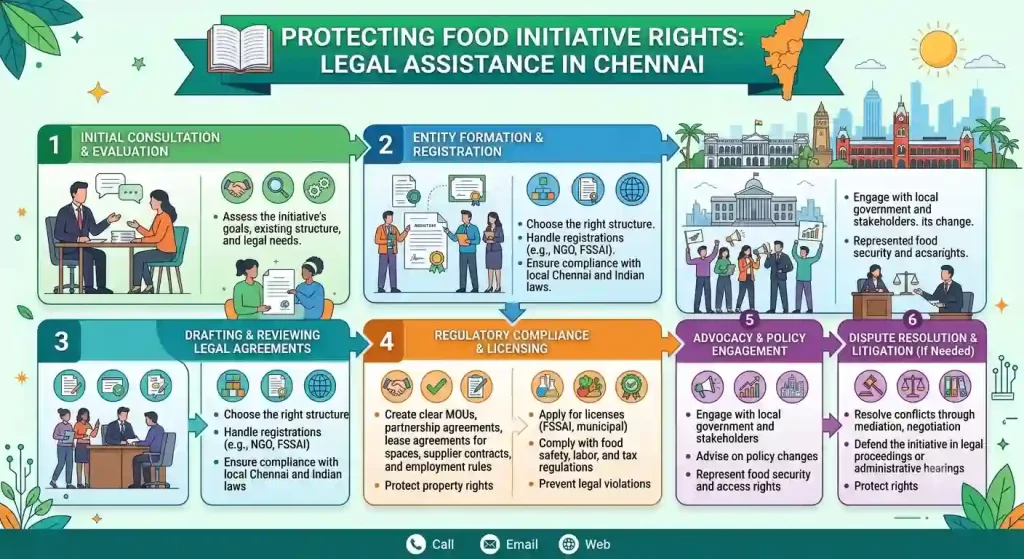
Importance of Legal Protection for Food Initiatives
Every food initiative requires strong legal protection throughout its operational lifecycle. Consequently, organizations should understand statutory duties before commencing commercial or charitable activities. Legal compliance protects licenses, brand reputation, consumer confidence, contractual relationships, and business continuity. Food businesses frequently encounter licensing delays, product recalls, labeling disputes, misleading advertisements, contractual breaches, intellectual property conflicts, and regulatory inspections. Proper documentation strengthens legal defenses during departmental investigations and court proceedings. Moreover, preventive legal reviews minimize unnecessary litigation costs and operational disruptions.
Professional legal support also assists during inspections, enforcement actions, appeals, and compliance audits. Important legal stakeholders include manufacturers, distributors, wholesalers, retailers, restaurants, delivery platforms, educational institutions, hospitals, and NGOs. Effective legal planning creates sustainable compliance while supporting long-term commercial growth. Timely legal intervention always improves dispute resolution opportunities before authorities initiate adverse proceedings.
Statutory Framework Governing Food Initiative Rights
Food initiative rights operate under several important Indian statutes regulating food safety, consumer protection, trade, contracts, and public health. Therefore, organizations should regularly review applicable legal obligations before launching products or services. Key legislation includes the Food Safety and Standards Act, 2006, Consumer Protection Act, 2019, Legal Metrology Act, Trade Marks Act, Copyright Act, Information Technology Act, and applicable environmental regulations. Civil disputes generally follow CPC procedures wherever jurisdiction permits.
Criminal allegations involving adulteration, fraud, forgery, cheating, or counterfeit goods may attract BNS, procedural safeguards under BNSS, and evidentiary provisions under BSA. Authorities also issue notifications, regulations, advisories, and compliance directions affecting food businesses. Continuous legal monitoring prevents avoidable penalties and enforcement actions. Experienced lawyers interpret changing regulations while protecting client interests before competent forums.
Common Legal Issues Affecting Food Initiatives
Food initiatives often encounter legal disputes involving regulatory compliance, licensing, contracts, consumer complaints, intellectual property, taxation, employment, and commercial transactions. Accordingly, organizations should identify risks before regulatory authorities initiate enforcement measures. Common legal concerns include delayed licenses, food safety violations, misleading labeling, unfair trade practices, product liability, supply chain disputes, trademark infringement, breach of distribution agreements, and online marketplace conflicts. Businesses should also preserve complete records supporting regulatory compliance. Key legal issues include:
- Food Safety license disputes.
- Product labeling violations.
- Consumer compensation claims.
- Contract enforcement disputes.
- Trademark infringement.
- Product recall challenges.
Professional legal representation significantly improves compliance management while reducing litigation before regulatory authorities, tribunals, consumer forums, and constitutional courts.
Government Authorities and Regulatory Oversight
Several government departments regulate food initiatives across Chennai and Tamil Nadu. Consequently, businesses should understand jurisdiction before seeking approvals or responding to notices. Primary authorities include the Food Safety and Standards Authority of India, Tamil Nadu Food Safety Department, Greater Chennai Corporation, Ministry of Health and Family Welfare, Department of Consumer Affairs, Legal Metrology Department, Pollution Control Board, and Commercial Taxes Department. Their responsibilities include licensing, inspections, enforcement, sampling, product testing, prosecution, and compliance monitoring. The following table summarizes major authorities:
| Government Authority | Primary Function | Common Legal Issue |
|---|---|---|
| FSSAI | Food safety regulation | Licensing disputes |
| Tamil Nadu Food Safety Department | Enforcement and inspections | Compliance notices |
| Greater Chennai Corporation | Local permissions | Health compliance |
| Legal Metrology Department | Packaging compliance | Label violations |
| Consumer Affairs Department | Consumer protection | Consumer complaints |
Proper legal guidance helps organizations maintain regulatory compliance while minimizing enforcement actions and commercial interruptions.
Legal Remedies for Food Initiative Disputes
Businesses, NGOs, individuals, and NRIs may pursue several legal remedies when food initiative rights face unlawful interference or regulatory action. Therefore, prompt legal advice remains essential after receiving notices or enforcement communications. Lawyers evaluate facts, collect evidence, prepare replies, and represent clients before competent authorities. Available remedies depend upon statutory provisions and dispute nature. Parties may challenge arbitrary actions through appeals, revisions, writ petitions, mediation, arbitration, or civil proceedings. Criminal complaints involving fraud, adulteration, forgery, cheating, or counterfeit products may require action under BNS, BNSS, and BSA. Appropriate legal strategies also prevent unnecessary penalties and business disruption. Common remedies include:
- Reply to departmental notices.
- Appeal against adverse orders.
- Seek interim relief.
- File writ petitions.
- Initiate civil recovery suits.
- Pursue criminal complaints where applicable.
Early legal intervention improves compliance outcomes and protects commercial operations.
Courts, Tribunals and Legal Forums
Food initiative disputes may proceed before different judicial and quasi-judicial forums depending upon statutory jurisdiction. Moreover, selecting the correct forum saves valuable time and litigation costs. Consumer disputes commonly proceed before the District Consumer Commission, State Consumer Commission, or National Consumer Commission. Civil contractual matters may reach competent Civil Courts under CPC. Regulatory decisions may become subject to judicial review before the Madras High Court.
Significant constitutional or national issues may ultimately reach the Supreme Court of India. Criminal allegations involving food adulteration, fraud, or counterfeit products proceed before criminal courts following BNSS procedures. Nearby police stations may investigate cognizable offences after lawful complaints. Arbitration and mediation also provide efficient alternatives for commercial disputes. Experienced advocates ensure effective representation throughout every litigation stage.
Compliance Strategies for Food Businesses and NGOs
Strong compliance systems reduce enforcement risks while protecting food initiative rights across commercial and charitable sectors. Accordingly, organizations should establish documented internal procedures covering licensing, labeling, hygiene, contracts, employment, and consumer grievance management. Periodic legal audits identify hidden compliance weaknesses before inspections occur. Staff training improves operational consistency and statutory awareness. Businesses should preserve licenses, invoices, laboratory reports, supplier agreements, testing certificates, and customer communications. Essential compliance measures include:
- Verify statutory licenses regularly.
- Review food labels before distribution.
- Maintain inspection records.
- Conduct internal compliance audits.
- Preserve supplier documentation.
- Train employees on regulatory duties.
Regular legal reviews strengthen governance while minimizing regulatory disputes, financial exposure, and operational interruptions.
Investigation, Enforcement and Litigation Support
Government authorities possess extensive investigative powers regarding food safety, labeling, licensing, and consumer protection matters. Consequently, businesses should respond carefully during inspections and enforcement proceedings. Authorities may inspect premises, collect samples, verify records, issue notices, suspend licenses, or initiate prosecutions. Legal counsel protects procedural rights throughout investigations while ensuring statutory compliance. Lawyers prepare written explanations, attend hearings, challenge unlawful actions, and represent clients before appellate authorities. Professional legal assistance also supports negotiations, settlement discussions, and judicial proceedings. The following table highlights common enforcement situations:
| Enforcement Issue | Legal Support | Possible Remedy |
|---|---|---|
| License suspension | Representation | Appeal |
| Food safety notice | Reply drafting | Compliance |
| Consumer complaint | Litigation defence | Settlement |
| Product recall | Regulatory advice | Risk management |
| Criminal investigation | Court representation | Legal defence |
Strategic legal guidance reduces litigation risks while preserving business reputation and regulatory compliance.
Risk Management and Preventive Legal Planning
Preventive legal planning offers stronger protection than post-dispute litigation for food initiatives. Therefore, organizations should integrate legal compliance into everyday business operations. Well-drafted contracts clarify responsibilities among manufacturers, suppliers, distributors, retailers, and service providers. Trademark registration protects valuable brands from infringement and unfair competition. Insurance coverage further reduces financial exposure arising from product liability claims. Regular compliance monitoring strengthens preparedness for regulatory inspections and judicial scrutiny. Businesses should also review advertising practices, online marketing, digital transactions, and privacy obligations. Chennai Law Forum assists clients with documentation, contract drafting, regulatory approvals, investigations, appellate proceedings, mediation, arbitration, consumer disputes, and High Court litigation. Comprehensive legal planning ultimately safeguards food initiatives while supporting sustainable commercial growth and public confidence.
Best Practices for Protecting Food Initiative Rights
Organizations should adopt preventive legal strategies before expanding food-related activities across Chennai and other jurisdictions. Furthermore, regular legal reviews help identify compliance gaps before authorities initiate enforcement proceedings. Businesses should maintain updated licenses, statutory registers, supplier agreements, quality certifications, and inspection reports. Digital record management strengthens evidence during audits and litigation. Companies must verify advertising claims, packaging details, product labels, and contractual obligations before market release. Regular interaction with regulatory authorities also improves compliance awareness. Recommended practices include:
- Conduct quarterly legal compliance audits.
- Review FSSAI regulations frequently.
- Register trademarks without delay.
- Preserve testing and laboratory reports.
- Train employees on food safety laws.
- Respond promptly to regulatory notices.
Consistent compliance protects commercial reputation while reducing disputes before consumer forums, regulatory authorities, tribunals, and constitutional courts.
Legal Assistance from Chennai Law Forum
Chennai Law Forum delivers comprehensive legal support for individuals, companies, NGOs, startups, manufacturers, distributors, exporters, importers, restaurants, educational institutions, hospitals, and NRIs. Therefore, clients receive practical legal solutions matching applicable statutory requirements. The firm assists with licensing, regulatory compliance, investigations, consumer disputes, commercial litigation, contract drafting, trademark protection, appellate proceedings, and constitutional remedies. Lawyers also represent clients before FSSAI authorities, Tamil Nadu Food Safety Department, Consumer Commissions, Civil Courts, Commercial Courts, the Madras High Court, and the Supreme Court. Criminal matters involving fraud, counterfeit products, adulteration, forgery, or cheating receive strategic representation under BNS, BNSS, and BSA. Early legal consultation minimizes regulatory exposure while preserving commercial continuity. Effective advocacy ultimately protects valuable food initiatives through every stage of legal proceedings.
Conclusion
Protecting food initiative rights requires continuous compliance, timely legal advice, and proactive risk management. Consequently, organizations should understand statutory duties before commencing or expanding operations. Proper licensing, accurate labeling, quality assurance, contract management, trademark protection, and regulatory compliance reduce enforcement risks. Chennai Law Forum provides reliable legal assistance for food businesses, NGOs, institutions, entrepreneurs, and NRIs across Chennai and Tamil Nadu.
The firm represents clients before regulatory departments, Consumer Commissions, Civil Courts, Commercial Courts, the Madras High Court, and the Supreme Court. Legal services include compliance reviews, investigations, appeals, arbitration, mediation, contractual disputes, intellectual property protection, and constitutional remedies. Strong documentation, preventive legal planning, and experienced representation safeguard commercial interests while supporting lawful business growth. Strategic legal guidance remains the strongest foundation for protecting food initiative rights in India.
Frequently Asked Questions
1. What are food initiative rights under Indian law?
Food initiative rights protect lawful food production, processing, distribution, marketing, consumer safety, licensing, and regulatory compliance under applicable Indian laws.
2. Which authority regulates food businesses in Chennai?
FSSAI and the Tamil Nadu Food Safety Department regulate licensing, inspections, food safety standards, enforcement actions, and statutory compliance.
3. What legal remedies exist against food safety notices?
Affected parties may submit replies, file appeals, seek writ remedies, challenge arbitrary actions, and obtain representation before competent authorities.
4. Can NGOs require legal assistance for food initiatives?
Yes. NGOs often require legal support for licensing, compliance, food distribution programs, contracts, consumer issues, and regulatory proceedings.
5. Which courts handle food initiative disputes?
Consumer Commissions, Civil Courts, Commercial Courts, the Madras High Court, and the Supreme Court hear different food-related disputes.
6. Why should businesses consult food law advocates early?
Early legal advice prevents penalties, strengthens compliance, protects licenses, resolves disputes efficiently, and safeguards long-term business operations.
Read More
- Fighting Food Adulteration: Legal Advocacy from Chennai Law Forum
- Financial Securities Legal Advisory: Chennai Law Forum Guidance
- Financial Matter Legal Services: Expert Assistance from Chennai Law Forum
- Legal Assistance for Finance Companies: Chennai Law Forum Expertise
- Seeking Justice in Family Court: Legal Support from Chennai Law Forum
- Food Safety and Standards Authority of India (FSSAI)